When visiting space, you might have noticed a little placard we keep at the front desk:
“Knit on with confidence and hope through all crises.”
It’s a phrase we all have held dear in the last several years—there’s been a lot going on in the world, and sometimes all we can do is knit on with hope. It’s a reminder to all of us that when faced with all the terrible things in the world, dropped stitches included, that we should continue with confidence. We don’t always think about the woman who gave us those words. She gave us so much that we take for granted in knitting today. Did you know that “i-cord,” the beautiful clean edge to so many shawls and cowls stands for “idiot-cord”? This technique was popularized and celebrated by one woman. Ever knit or wear an infinity scarf or Moebius cowl? That’s also a signature style spotlighted by our star of the month and the mother of modern knitting.
August 9 will mark the 116th birthday of Elizabeth Zimmermann, one of the first true knitting celebrities. Born in London in 1910, Elizabeth grew up in England and attended design schools in Germany and Switzerland before moving to the United States, where she settled in Wisconsin with her husband. A lifelong knitter, Elizabeth was a true multi-cultural stitcher, skilled in both English and continental knitting.
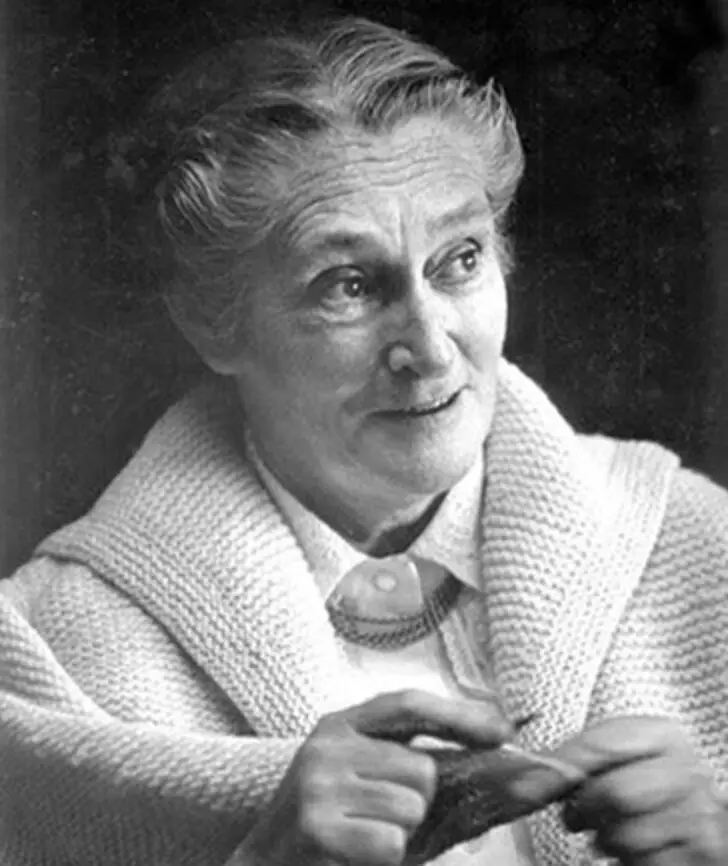
From the 1950s on, Elizabeth Zimmermann set the standards that guide our craft today. There is no way to overstate her accomplishments or influence. Every time we pick up our needles, scroll through social media, or gather together as crafters, we are in a world she helped to shape. The home she made in Wisconsin became the headquarters of Schoolhouse Press, publisher of knitting books and guides, as well as one of the first suppliers of circular needles. On this property, Elizabeth also hosted an annual summer Knitter’s Camp—the first of its kind. If that wasn’t enough, she also hosted her very own PBS series, Knitting Workshop. All of these programs, along with her newsletters and patterns, helped shape a legacy of excellence.
If there is only one book you could ever read on the subject of knitting, you would find us recommending Knitting Without Tears, first published in 1971 and as fresh today as it was then. This is one of the great guides, focusing on seamless garments, and it features Elizabeth’s distinctive, conversational writing style. We might then guide you to Knitter’s Almanac, a follow-up guide to a year of knitting projects, before convincing you that while you asked for one book, there were actually three you needed. That would bring us to The Opinionated Knitter, a collection of Elizabeth’s newsletters and patterns. Published posthumously, this collection of her wit and wisdom also features one of her signature patterns, the Baby Surprise Jacket.
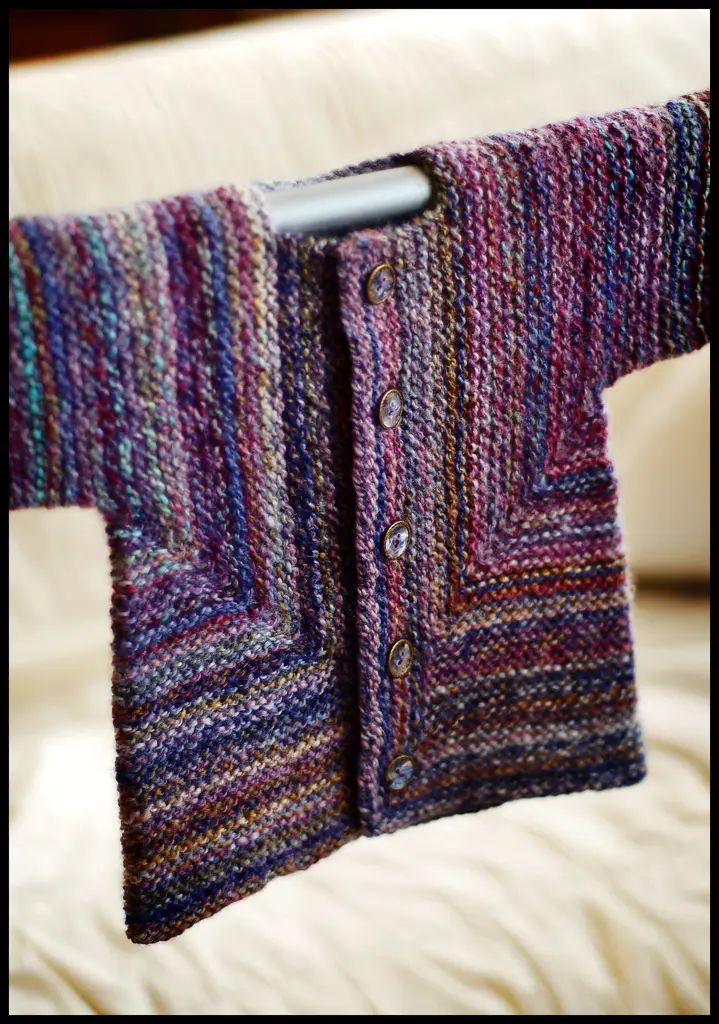
This garter sweater is an engineering delight, with only two seams to make the jacket come together—a deceptively simple project with a huge payoff.
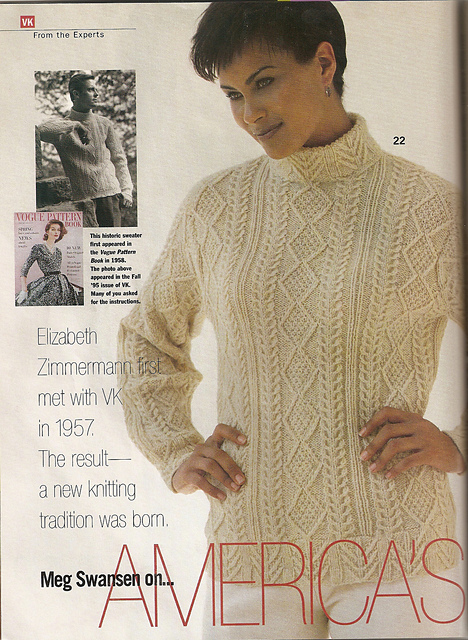
Elizabeth also delivered the first Aran Sweater featured in an American magazine in 1957.
Elizabeth advocated for seamless sweaters and circular needles (then relatively new!) and developed a sizing method called the Elizabeth Percentage System (EPS) to help knitters adjust patterns to their own needs.
As a trailblazer in the field, Elizabeth offers one of the greatest lessons we can learn: knit confidently. She encouraged knitters to work without patterns, think for themselves, and make design choices that worked for them. This is a craft, and we should see ourselves as part of a great tradition of craft, not just copyists. Embrace your own creativity: play with patterns, colors, and yarns. Her lessons were not about getting locked into tradition or just one way to do anything. She wanted us to learn the skills and mechanics of knitting so we can knit confidently. A crisis is easier when you fully embrace the experience of learning, all the successes and failures that we encounter, and still hold on to home
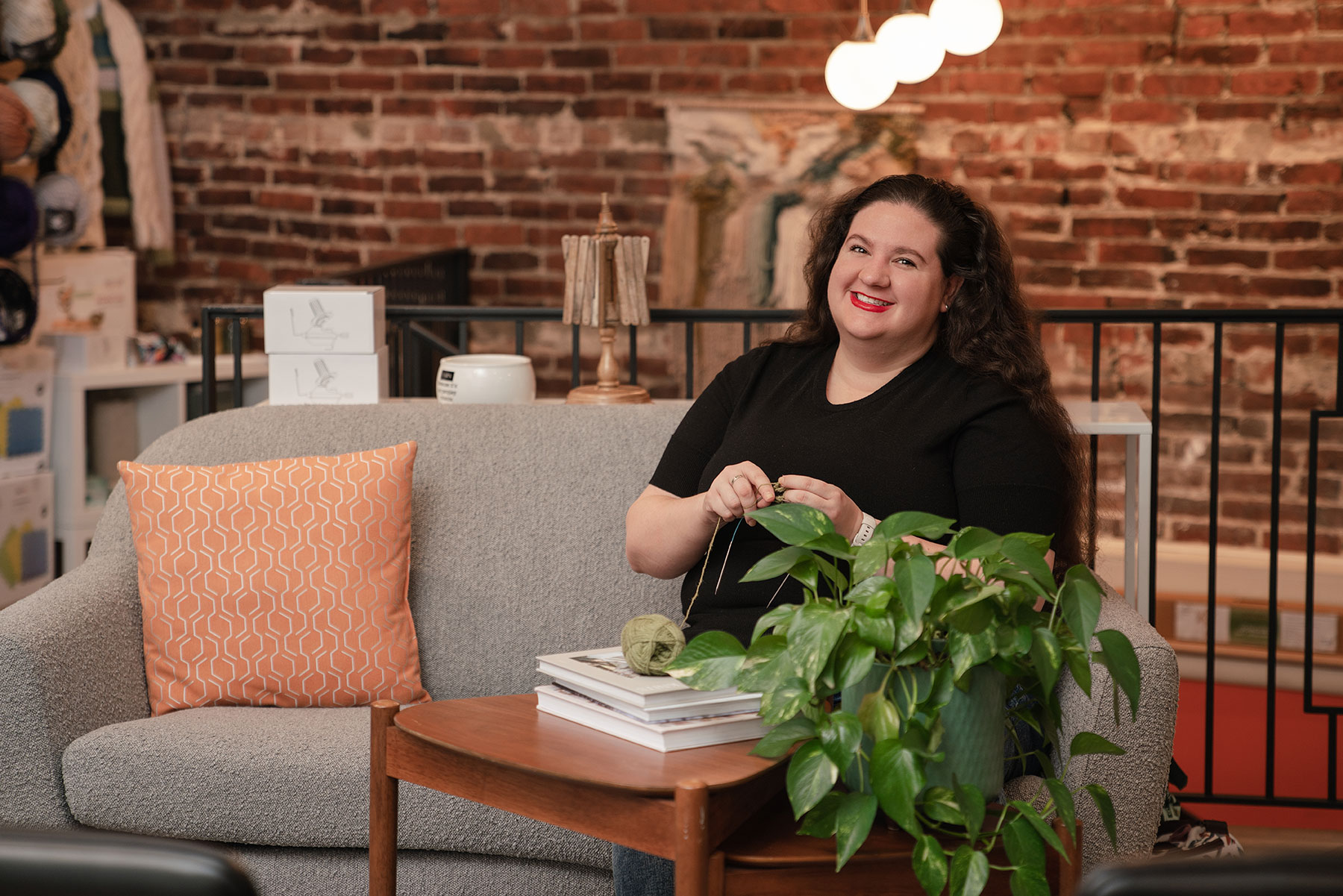
Each time I welcome a new group of students into an Introduction to Knitting class, I like to ask what has inspired them to come to the craft. Lately, I have been hearing a desire for help in building a little peace in our lives—there’s too much chaos and too much stress, and a need for something to keep us going. Whether providing a creative space of our own, something to share in our community spaces, or a retreat for a little quiet, craft has always been a practice where we can stretch our creative muscles, develop our skills, and maybe even snag a bit of emotional regulation along the way.
In space, we’ve been thinking a lot about crafting as a way to slow down and connect. Stay tuned for upcoming events and stitch-a-longs inspired by Elizabeth Zimmermann and the wisdom she gifted us.