
Do you fall hard for fabulous fibres? Do discussions about sheep breeds, staple length, and drafting methods get your dopamine dancing? Are you still searching for your perfect yarn? Sounds like spinning is for you!
Whether you’d like to learn more about how yarns are made, or you’re dreaming of a sweater quantity of your very own hand-spun, spinning is a great way to gain a deeper understanding of fibre types, yarn construction, and how these factors affect your finished projects.
Where to start? All you really need is a simple drop spindle and some unspun fibre, both of which you can find in store! (If you’re a book learner, grab a copy of Respect The Spindle or Start Spinning while you’re here—both are great resources for beginners and beyond.)
Not quite ready to venture out on your own? Our Introduction to Spinning classes are the perfect place to start!
First, though, let’s take a look at our raw materials!
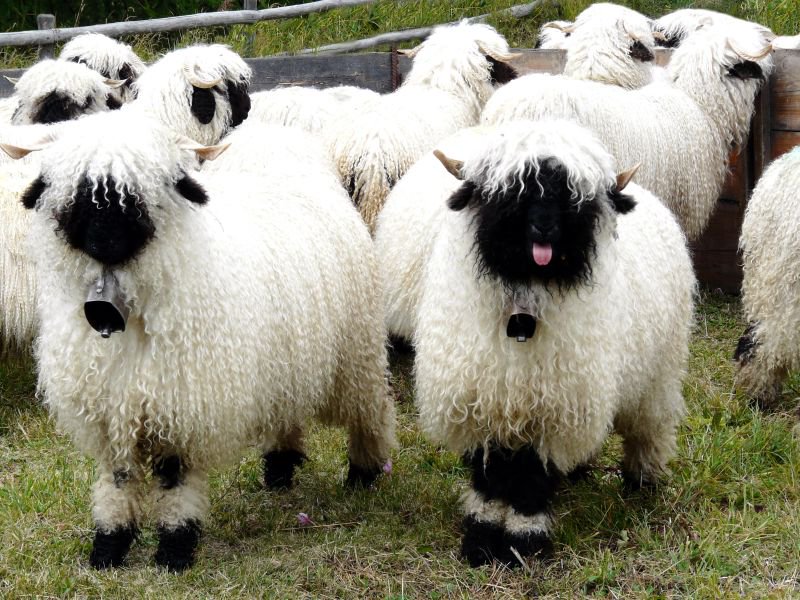
Spinning Fibre
Roving? Combed top? What the heck is a “sliver” and should I be scared of it? Which kind of wool do I want to get?
Like with any craft, fibre terminology can be confusing at first. Here are a few basic terms to add to your spinning vocabulary:
- Carding: The first step of fibre prep. Fibres are brushed on wire-bristled cards or drums into a fluffy, airy cloud.
- Gilling/Combing: Carded fibres are pulled through rows of steel pins until parallel. A final, finer pass smooths and removes short fibres.
- Crimp: The natural waviness of each fibre. More crimp = more bounce & elasticity in your yarn, plus it’s easier to spin!
- Micron Count: The diameter of each fibre. Lower micron count = finer, softer fibre.
- Staple Length: The length of each individual fibre. (Longer fibres are generally easier to spin.)
- Sliver/Roving*: Unspun carded fibre. Sliver (“SLY-ver”) comes in narrow strands with zero twist, roving is thicker and slightly twisted. Good for woolen-style spinning (think lofty, fuzzy, rustic).
- Top: Unspun combed fibre. Good for worsted-style spinning (think dense, smooth, polished).
*Note: “Roving” and “sliver” are also used as generic terms, so double-check to see if your fibre has been carded or combed!
Now let’s meet some of the fibres you can find in our shop!
Ashford Corriedale Sliver
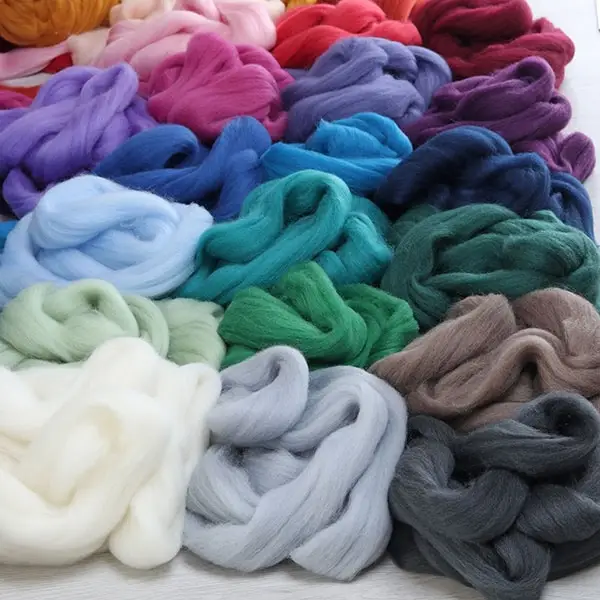
Ashford’s wool is grown on farms in the South Island of New Zealand, where the sheep graze on large grassy paddocks and are free from mulesing. A favorite for hand spinners, Corriedale wool has a defined, even crimp and is smooth and easy to spin. Corriedale will plump up after washing and has good elasticity. Comes in undyed and dyed (using ecologically-safe Oeko-Tex compliant dyes) colors.
- Preparation: Carded, gilled, and combed.
- Good for: Woolen, worsted, semi-worsted spinning. Great for beginners!
- Micron count: 27-30
- Staple length: 4¼”
Ashford Merino Sliver
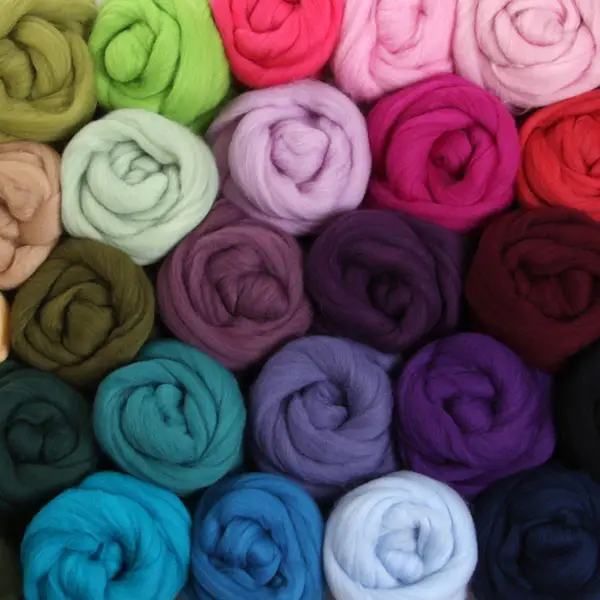
Ashford’s Merino wool is very soft with a closely spaced crimp, ideal for fine woolen or worsted-spun yarns. Comes in undyed and dyed (using ecologically safe Oeko-Tex compliant dyes) colors.
- Preparation: Carded, gilled, and combed.
- Good for: Woolen or worsted spinning.
- Micron count: 19-22
- Staple length: 2-3″
Ashford Silk Merino Sliver
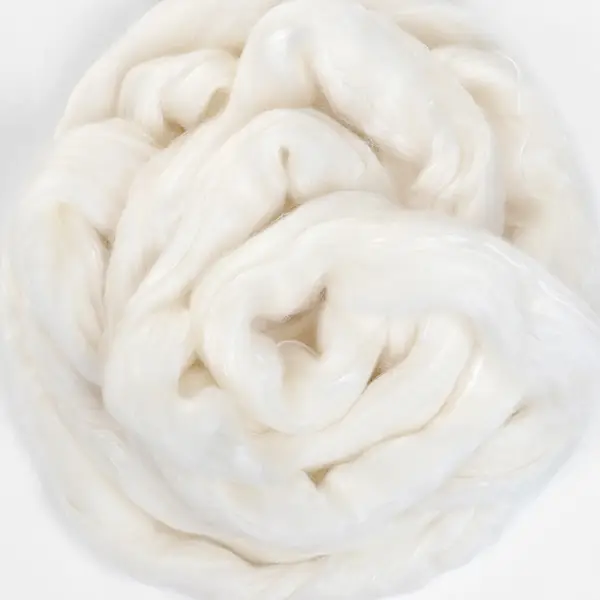
A sumptuous blend of fine New Zealand Merino wool and lustrous mulberry silk. Creates fine, lacy, lightweight yarns that will take dye beautifully.
- Preparation: Carded, gilled, and combed.
- Good for: Worsted & semi-worsted spinning.
- Micron count: 22 (Merino), 15 (silk)
- Staple length: 2-3″ (Merino)
Manos del Uruguay Superwash Merino Top
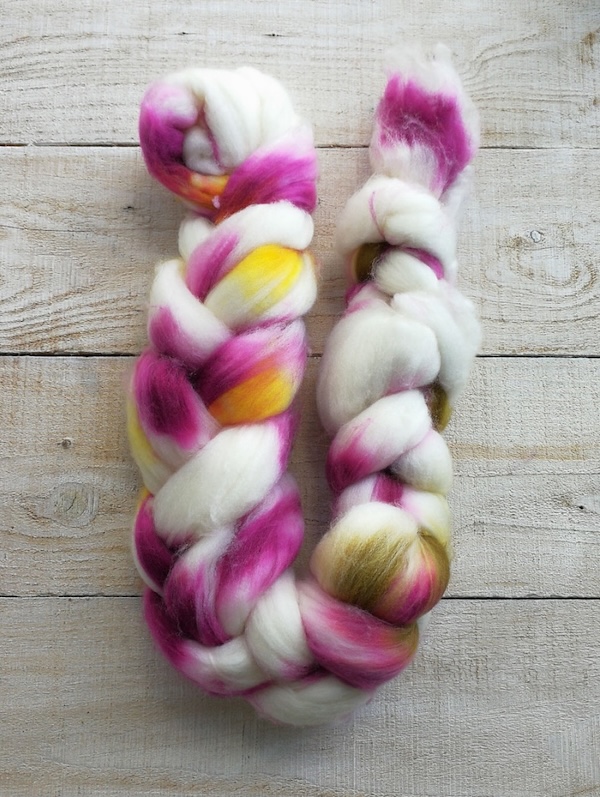
Hand-dyed by the amazing artisans of Manos del Uruguay, this machine-washable extrafine Merino wool top is perfect for worsted-style spinning.
- Preparation: Carded and combed, superwash.
- Good for: Worsted spinning.
- Micron count: 19-22
- Staple length: 2-3″